

Skin allergies and rashes are annoying in the best case, and genuinely scary in the worst.One day your skin is fine, and the next you are dealing with itching, red patches, bumps, dryness, swelling, or a burning feeling that makes it hard to focus on anything else.Skin allergies and rashes
are annoying in the best case, and genuinely scary in the worst.One day your skin is fine, and the next you are dealing with itching, red patches, bumps, dryness, swelling, or a burning feeling that makes it hard to focus on anything else.
The good news is that most rashes are treatable at home once you understand what is likely causing them. The tricky part is that many rashes look similar, even when the causes are totally different.
This guide will help you figure out what may be going on, what medicines usually work, what you can do for quick relief, and when you should stop self-treating and see a doctor.
Important note: This article is for general education. If a rash is severe, spreading fast, painful, or linked with fever, facial swelling, or breathing trouble, treat it as urgent and get medical help.
What counts as a “skin allergy” vs a “rash”?
A rash is a broad term. It simply means visible skin changes like redness, bumps, scaling, blisters, welts, or swelling.
A skin allergy is one possible cause of a rash, where your immune system overreacts to something like a fragrance, metal, medicine, food, or pollen.
So, all skin allergies are rashes, but not all rashes are allergies.
Common causes of skin allergies and rashes (and what they often look like)
1) Allergic contact dermatitis
This happens when your skin touches something it is allergic to.
Common triggers
- Nickel (jewelry, watch straps, belt buckles)
- Fragrances and preservatives in cosmetics
- Hair dye (PPD)
- Latex (gloves)
- Certain topical antibiotics (like neomycin)


Typical signs
- Red, itchy patches where the trigger touched
- Small blisters or oozing in some cases
- Can show up hours to 2 days after exposure
2) Irritant contact dermatitis
Not a true allergy. It is skin damage caused by harsh substances.
Common triggers
- Soaps, detergents, sanitizers
- Frequent handwashing
- Cleaning agents
- Sweat and friction
Typical signs
- Dryness, cracking, burning, stinging
- Often on hands or areas exposed repeatedly
3) Urticaria (hives)
Raised, itchy welts that can come and go quickly.
Common triggers
- Foods (nuts, shellfish, eggs)
- Medicines (antibiotics, NSAIDs like ibuprofen)
- Viral infections
- Heat, cold, pressure, exercise
- Stress (can worsen it)
Typical signs
- Raised, pale or red welts
- Move around the body
- Each spot often lasts less than 24 hours
4) Eczema (atopic dermatitis)
A chronic, itchy, dry skin condition that flares.
Common triggers
- Dry weather
- Harsh soaps
- Dust mites, pollen
- Stress
- Certain fabrics like wool
Typical signs
- Dry, itchy, inflamed patches
- Common on face, neck, elbows, behind knees
- Thickened skin with repeated scratching
5) Heat rash (miliaria)
Blocked sweat ducts, usually in hot or humid weather.
Typical signs
- Small prickly bumps
- Worse with sweating
- Often on neck, chest, back, under breasts, groin
6) Fungal rash (tinea)
Often mistaken for “allergy,” especially if it is itchy and red.
Typical signs
- Ring-shaped rash with a clearer center (not always)
- Scaling at the edges
- Common in groin (jock itch), feet (athlete’s foot), body (ringworm)
7) Scabies
A contagious mite infestation. Itching is intense, especially at night.
Typical signs
- Very itchy bumps, similar to itchy bumps that can be caused by other conditions
- Small lines (burrows) sometimes visible
- Common between fingers, wrists, waistline, genitals
8) Drug rash
A rash that starts after a new medication.
Typical signs
- Widespread red spots or patches
- Itching
- Can be mild or severe
Some drug reactions can be dangerous. If you have facial swelling, blisters, mouth sores, fever, or your skin hurts, get urgent care.
9) Viral rashes
Some viral infections cause rashes, especially in children, but adults can get them too.
Typical signs
- Rash plus fever, fatigue, sore throat, body aches
- Rash can be widespread
Quick relief at home (works for many common rashes)
If you are not in the danger zone (we will cover red flags soon), these steps can reduce symptoms fast.
1) Cool the skin
- Cool compress for 10 to 15 minutes, 2 to 4 times a day
- Lukewarm baths, not hot
- Avoid heavy sweating for a day or two
2) Stop the “suspects”
For the next week, keep it boring:
- No perfumes, new skincare, hair dye, new soaps, or strong detergents
- Use a gentle cleanser (or just water on affected areas)
- Wear loose cotton clothing
3) Moisturize properly (especially for eczema and irritant rash)
- Use a thick, fragrance-free moisturizer
- Apply within 3 minutes of bathing
- Petroleum jelly can work very well for barrier repair
4) Do not scratch (easier said than done)
Scratching makes the rash last longer and can cause infection.
Practical tips:
- Keep nails short
- Wear cotton gloves at night if you scratch in sleep
- Use a cold compress when itching peaks
5) Avoid “mixing random creams”
Many people make rashes worse by applying multiple products.
If you are unsure what it is, start with:
- Moisturizer
- Simple anti-itch options (like calamine)
- A short course of mild steroid for obvious allergy or eczema type inflammation (details below)
Medicines commonly used for skin allergies and rashes
The best medicine depends on the cause. Here are the common categories doctors and pharmacists typically use.
1) Antihistamines (for itching and hives)
These help most when histamine is involved, especially hives and some allergic rashes.
Non-drowsy options (often preferred in daytime)
- Cetirizine
- Levocetirizine
- Loratadine
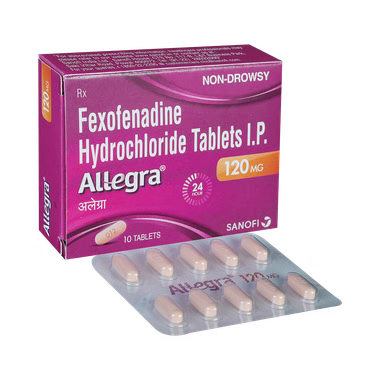
- Fexofenadine
Drowsy options (sometimes used at night for sleep)
- Chlorpheniramine
- Diphenhydramine (can cause significant drowsiness)
Tips
- If you feel sleepy on cetirizine, consider fexofenadine or loratadine.
- If hives are recurring, you may need a consistent schedule for a few days, not just one dose.
2) Topical corticosteroids (for inflammation, eczema, allergic dermatitis)
These reduce redness and itching when the skin is inflamed. They are commonly used in treating conditions like eczema, allergic dermatitis etc.
Common examples
- Hydrocortisone (mild)
- Mometasone, betamethasone, clobetasol (stronger, usually prescription)
How to use safely
- Use the lowest strength that works.
- Apply a thin layer once or twice daily for a short course (often 5 to 7 days unless told otherwise).
- Avoid strong steroids on face, groin, armpits unless prescribed.
- Do not use on suspected fungal infections because it can worsen them.
3) Anti-itch soothers (helpful add-ons)
- Calamine lotion
- Menthol or pramoxine-based anti-itch lotions (if available)
- Colloidal oatmeal baths
These do not treat the root cause, but can reduce suffering while the rash settles.
4) Antifungal creams (for fungal rashes)
If the rash is scaly, ring-like, in groin/feet, or keeps returning, consider a fungal cause.
Common options
- Clotrimazole
- Terbinafine
- Ketoconazole
Tips
- Use consistently for the full course (often 2 to 4 weeks).
- Keep the area dry.
- Avoid steroid combinations unless a clinician specifically recommends them.
5) Antibiotic ointments (only when infection is likely)
A rash can get infected from scratching.
Possible signs of infection
- Increasing pain, warmth, swelling
- Pus, honey-colored crusting
- Red streaking
- Fever
In that case, topical antibiotics may help for minor localized infection, but worsening infection often needs medical evaluation and oral antibiotics.
6) Scabies treatment (needs specific medicine)
Scabies does not improve with standard anti-allergy creams.
Typical treatments include permethrin lotion or other prescription options. Close contacts often need treatment too. Bedding and clothing hygiene is important.
A simple “which medicine should I consider?” guide
Use this as a rough direction, not a final diagnosis.
If it looks like hives (raised welts that move around)
- Non-drowsy antihistamine
- Cool compress
- Avoid suspected triggers
- Seek urgent care if swelling of lips/eyes or breathing issues
If it looks like allergic contact dermatitis (localized itch where something touched)
- Stop the trigger
- Mild topical steroid for a short course
- Moisturizer barrier repair
- Antihistamine if itching is significant
If it is dry, flaky, recurring (eczema type)
- Daily moisturizer as the main treatment
- Mild steroid during flares
- Gentle soap and short showers
If it is ring-shaped, scaly, in groin/feet, worsens with steroid creams
- Antifungal cream consistently
- Keep area dry
- Avoid steroid-only creams
If itching is intense at night and others at home are itchy too
- Consider scabies, get medical advice
- Do not keep trial-and-erroring creams
What NOT to do (common mistakes that make rashes worse)
- Do not apply strong steroid creams “just in case.” They can worsen fungal infections and thin skin if misused.
- Do not use multiple new products at once. You will never know what caused what.
- Do not scrub the rash. Friction inflames it more.
- Do not ignore red flags. Some rashes are medical emergencies.
When to see a doctor urgently (red flags)
Get urgent care if any of the below is present:
- Trouble breathing, wheezing, tight throat
- Swelling of lips, tongue, face, or eyes
- Rash with fever, severe headache, neck stiffness
- Widespread blistering, skin peeling, or mouth/eye sores
- Purple spots that do not blanch (do not fade when pressed)
- Rapidly spreading rash, severe pain, or large swelling
- Signs of infection (pus, red streaks, fever)
- Rash after starting a new medicine, especially if severe
Also see a clinician if:
- Rash lasts more than 1 to 2 weeks despite basic care
- You have diabetes, immune suppression, or chronic skin disease
- The rash keeps returning in the same spot
- It is on the face or genitals and not improving
Quick relief plan you can follow today (simple and practical)
If your symptoms are mild to moderate and no red flags:
- Stop all new products for 7 days (fragrances, cosmetics, new soap).
- Cool compress twice a day.
- Moisturize twice a day with a fragrance-free thick moisturizer.
- For itching: take a non-drowsy antihistamine (if suitable for you).
- For inflamed patches: consider mild hydrocortisone for a short course (avoid if fungal rash suspected).
- If the rash is scaly and ring-like: use an antifungal cream instead of steroids.
- If it worsens or spreads fast: see a doctor.
Need medicines fast? (Medstown option)
If you need quick access to common allergy and rash medicines like antihistamines, soothing lotions, moisturizers, or doctor-prescribed creams, you can use the Medstown online medicine delivery app, which delivers in just 30 minutes from your trusted local medical shops (availability may vary by location).
FAQ: Skin Allergies & Rashes
1) How do I know if my rash is an allergy or an infection?
Allergies often itch and may appear after exposure to a trigger, while infections often become painful, warm, swollen, and may ooze or form crusts. Fever and pus suggest infection. If unsure, get checked.
2) What is the fastest way to stop itching?
Cool compresses, non-drowsy antihistamines for allergic itching, calamine or anti-itch lotions, and avoiding heat and sweating usually help quickly.
3) Can stress cause skin rashes?
Yes. Stress can trigger or worsen eczema, hives, and itching by affecting immune and inflammatory pathways.
4) Is it safe to use hydrocortisone cream on every rash?
No. Hydrocortisone helps inflammation from allergy or eczema, but it can worsen fungal infections and should be used carefully on the face and sensitive areas.
5) Why does my rash get worse at night?
Itching often feels worse at night due to fewer distractions, warmer skin under blankets, and natural nighttime changes in skin barrier and inflammation. Scabies itching is also classically worse at night.
6) Are fungal rashes always ring-shaped?
No. Many are not perfect rings. Look for scaling, slow spread, recurrence, and common locations like groin, feet, or between toes.
7) When should I stop self-treatment?
If there is no improvement in 7 to 10 days, if the rash spreads quickly, becomes painful, shows signs of infection, or comes with fever or facial swelling, get medical care.
8) Can I take antihistamines daily during an allergy flare?
Many people do for short periods, but it depends on your health status and the specific medicine. If you need them daily for weeks, talk to a clinician to find the cause.
9) What is the best moisturizer for eczema or irritated skin?
A thick, fragrance-free moisturizer or petroleum jelly is often best. Lotions with fragrance can sting and worsen irritation.
10) Can foods cause skin rashes?
Yes, especially hives in some people. Common triggers include nuts, shellfish, eggs, and certain additives. If reactions are severe or involve breathing issues, treat it as urgent and seek medical help.
The good news is that most rashes are treatable at home once you understand what is likely causing them. The tricky part is that many rashes look similar, even when the causes are totally different.
This guide will help you figure out what may be going on, what medicines usually work, what you can do for quick relief, and when you should stop self-treating and see a doctor.
Important note: This article is for general education. If a rash is severe, spreading fast, painful, or linked with fever, facial swelling, or breathing trouble, treat it as urgent and get medical help.
What counts as a “skin allergy” vs a “rash”?
A rash is a broad term. It simply means visible skin changes like redness, bumps, scaling, blisters, welts, or swelling.
A skin allergy is one possible cause of a rash, where your immune system overreacts to something like a fragrance, metal, medicine, food, or pollen.
So, all skin allergies are rashes, but not all rashes are allergies.
Common causes of skin allergies and rashes (and what they often look like)
1) Allergic contact dermatitis
This happens when your skin touches something it is allergic to.
Common triggers
- Nickel (jewelry, watch straps, belt buckles)
- Fragrances and preservatives in cosmetics
- Hair dye (PPD)
- Latex (gloves)
- Certain topical antibiotics (like neomycin)
Typical signs
- Red, itchy patches where the trigger touched
- Small blisters or oozing in some cases
- Can show up hours to 2 days after exposure
2) Irritant contact dermatitis
Not a true allergy. It is skin damage caused by harsh substances.
Common triggers
- Soaps, detergents, sanitizers
- Frequent handwashing
- Cleaning agents
- Sweat and friction
Typical signs
- Dryness, cracking, burning, stinging
- Often on hands or areas exposed repeatedly
3) Urticaria (hives)
Raised, itchy welts that can come and go quickly.
Common triggers
- Foods (nuts, shellfish, eggs)
- Medicines (antibiotics, NSAIDs like ibuprofen)
- Viral infections
- Heat, cold, pressure, exercise
- Stress (can worsen it)
Typical signs
- Raised, pale or red welts
- Move around the body
- Each spot often lasts less than 24 hours
4) Eczema (atopic dermatitis)
A chronic, itchy, dry skin condition that flares.
Common triggers
- Dry weather
- Harsh soaps
- Dust mites, pollen
- Stress
- Certain fabrics like wool
Typical signs
- Dry, itchy, inflamed patches
- Common on face, neck, elbows, behind knees
- Thickened skin with repeated scratching
5) Heat rash (miliaria)
Blocked sweat ducts, usually in hot or humid weather.
Typical signs
- Small prickly bumps
- Worse with sweating
- Often on neck, chest, back, under breasts, groin
6) Fungal rash (tinea)
Often mistaken for “allergy,” especially if it is itchy and red.
Typical signs
- Ring-shaped rash with a clearer center (not always)
- Scaling at the edges
- Common in groin (jock itch), feet (athlete’s foot), body (ringworm)
7) Scabies
A contagious mite infestation. Itching is intense, especially at night.
Typical signs
- Very itchy bumps, similar to itchy bumps that can be caused by other conditions
- Small lines (burrows) sometimes visible
- Common between fingers, wrists, waistline, genitals
8) Drug rash
A rash that starts after a new medication.
Typical signs
- Widespread red spots or patches
- Itching
- Can be mild or severe
Some drug reactions can be dangerous. If you have facial swelling, blisters, mouth sores, fever, or your skin hurts, get urgent care.
9) Viral rashes
Some viral infections cause rashes, especially in children, but adults can get them too.
Typical signs
- Rash plus fever, fatigue, sore throat, body aches
- Rash can be widespread
Quick relief at home (works for many common rashes)
If you are not in the danger zone (we will cover red flags soon), these steps can reduce symptoms fast.
1) Cool the skin
- Cool compress for 10 to 15 minutes, 2 to 4 times a day
- Lukewarm baths, not hot
- Avoid heavy sweating for a day or two
2) Stop the “suspects”
For the next week, keep it boring:
- No perfumes, new skincare, hair dye, new soaps, or strong detergents
- Use a gentle cleanser (or just water on affected areas)
- Wear loose cotton clothing
3) Moisturize properly (especially for eczema and irritant rash)
- Use a thick, fragrance-free moisturizer
- Apply within 3 minutes of bathing
- Petroleum jelly can work very well for barrier repair
4) Do not scratch (easier said than done)
Scratching makes the rash last longer and can cause infection.
Practical tips:
- Keep nails short
- Wear cotton gloves at night if you scratch in sleep
- Use a cold compress when itching peaks
5) Avoid “mixing random creams”
Many people make rashes worse by applying multiple products.
If you are unsure what it is, start with:
- Moisturizer
- Simple anti-itch options (like calamine)
- A short course of mild steroid for obvious allergy or eczema type inflammation (details below)
Medicines commonly used for skin allergies and rashes
The best medicine depends on the cause. Here are the common categories doctors and pharmacists typically use.
1) Antihistamines (for itching and hives)
These help most when histamine is involved, especially hives and some allergic rashes.
Non-drowsy options (often preferred in daytime)
- Cetirizine
- Levocetirizine
- Loratadine
- Fexofenadine
Drowsy options (sometimes used at night for sleep)
- Chlorpheniramine
- Diphenhydramine (can cause significant drowsiness)
Tips
- If you feel sleepy on cetirizine, consider fexofenadine or loratadine.
- If hives are recurring, you may need a consistent schedule for a few days, not just one dose.
2) Topical corticosteroids (for inflammation, eczema, allergic dermatitis)
These reduce redness and itching when the skin is inflamed. They are commonly used in treating conditions like eczema, allergic dermatitis etc.
Common examples
- Hydrocortisone (mild)
- Mometasone, betamethasone, clobetasol (stronger, usually prescription)
How to use safely
- Use the lowest strength that works.
- Apply a thin layer once or twice daily for a short course (often 5 to 7 days unless told otherwise).
- Avoid strong steroids on face, groin, armpits unless prescribed.
- Do not use on suspected fungal infections because it can worsen them.
3) Anti-itch soothers (helpful add-ons)
- Calamine lotion
- Menthol or pramoxine-based anti-itch lotions (if available)
- Colloidal oatmeal baths
These do not treat the root cause, but can reduce suffering while the rash settles.
4) Antifungal creams (for fungal rashes)
If the rash is scaly, ring-like, in groin/feet, or keeps returning, consider a fungal cause.
Common options
- Clotrimazole
- Terbinafine
- Ketoconazole
Tips
- Use consistently for the full course (often 2 to 4 weeks).
- Keep the area dry.
- Avoid steroid combinations unless a clinician specifically recommends them.
5) Antibiotic ointments (only when infection is likely)
A rash can get infected from scratching.
Possible signs of infection
- Increasing pain, warmth, swelling
- Pus, honey-colored crusting
- Red streaking
- Fever
In that case, topical antibiotics may help for minor localized infection, but worsening infection often needs medical evaluation and oral antibiotics.
6) Scabies treatment (needs specific medicine)
Scabies does not improve with standard anti-allergy creams.
Typical treatments include permethrin lotion or other prescription options. Close contacts often need treatment too. Bedding and clothing hygiene is important.
A simple “which medicine should I consider?” guide
Use this as a rough direction, not a final diagnosis.
If it looks like hives (raised welts that move around)
- Non-drowsy antihistamine
- Cool compress
- Avoid suspected triggers
- Seek urgent care if swelling of lips/eyes or breathing issues
If it looks like allergic contact dermatitis (localized itch where something touched)
- Stop the trigger
- Mild topical steroid for a short course
- Moisturizer barrier repair
- Antihistamine if itching is significant
If it is dry, flaky, recurring (eczema type)
- Daily moisturizer as the main treatment
- Mild steroid during flares
- Gentle soap and short showers
If it is ring-shaped, scaly, in groin/feet, worsens with steroid creams
- Antifungal cream consistently
- Keep area dry
- Avoid steroid-only creams
If itching is intense at night and others at home are itchy too
- Consider scabies, get medical advice
- Do not keep trial-and-erroring creams
What NOT to do (common mistakes that make rashes worse)
- Do not apply strong steroid creams “just in case.” They can worsen fungal infections and thin skin if misused.
- Do not use multiple new products at once. You will never know what caused what.
- Do not scrub the rash. Friction inflames it more.
- Do not ignore red flags. Some rashes are medical emergencies.
When to see a doctor urgently (red flags)
Get urgent care if any of the below is present:
- Trouble breathing, wheezing, tight throat
- Swelling of lips, tongue, face, or eyes
- Rash with fever, severe headache, neck stiffness
- Widespread blistering, skin peeling, or mouth/eye sores
- Purple spots that do not blanch (do not fade when pressed)
- Rapidly spreading rash, severe pain, or large swelling
- Signs of infection (pus, red streaks, fever)
- Rash after starting a new medicine, especially if severe
Also see a clinician if:
- Rash lasts more than 1 to 2 weeks despite basic care
- You have diabetes, immune suppression, or chronic skin disease
- The rash keeps returning in the same spot
- It is on the face or genitals and not improving
Quick relief plan you can follow today (simple and practical)
If your symptoms are mild to moderate and no red flags:
- Stop all new products for 7 days (fragrances, cosmetics, new soap).
- Cool compress twice a day.
- Moisturize twice a day with a fragrance-free thick moisturizer.
- For itching: take a non-drowsy antihistamine (if suitable for you).
- For inflamed patches: consider mild hydrocortisone for a short course (avoid if fungal rash suspected).
- If the rash is scaly and ring-like: use an antifungal cream instead of steroids.
- If it worsens or spreads fast: see a doctor.
Need medicines fast? (Medstown option)
If you need quick access to common allergy and rash medicines like antihistamines, soothing lotions, moisturizers, or doctor-prescribed creams, you can use the Medstown online medicine delivery app, which delivers in just 30 minutes from your trusted local medical shops (availability may vary by location).
FAQ: Skin Allergies & Rashes
1) How do I know if my rash is an allergy or an infection?
Allergies often itch and may appear after exposure to a trigger, while infections often become painful, warm, swollen, and may ooze or form crusts. Fever and pus suggest infection. If unsure, get checked.
2) What is the fastest way to stop itching?
Cool compresses, non-drowsy antihistamines for allergic itching, calamine or anti-itch lotions, and avoiding heat and sweating usually help quickly.
3) Can stress cause skin rashes?
Yes. Stress can trigger or worsen eczema, hives, and itching by affecting immune and inflammatory pathways.
4) Is it safe to use hydrocortisone cream on every rash?
No. Hydrocortisone helps inflammation from allergy or eczema, but it can worsen fungal infections and should be used carefully on the face and sensitive areas.
5) Why does my rash get worse at night?
Itching often feels worse at night due to fewer distractions, warmer skin under blankets, and natural nighttime changes in skin barrier and inflammation. Scabies itching is also classically worse at night.
6) Are fungal rashes always ring-shaped?
No. Many are not perfect rings. Look for scaling, slow spread, recurrence, and common locations like groin, feet, or between toes.
7) When should I stop self-treatment?
If there is no improvement in 7 to 10 days, if the rash spreads quickly, becomes painful, shows signs of infection, or comes with fever or facial swelling, get medical care.
8) Can I take antihistamines daily during an allergy flare?
Many people do for short periods, but it depends on your health status and the specific medicine. If you need them daily for weeks, talk to a clinician to find the cause.
9) What is the best moisturizer for eczema or irritated skin?
A thick, fragrance-free moisturizer or petroleum jelly is often best. Lotions with fragrance can sting and worsen irritation.
10) Can foods cause skin rashes?
Yes, especially hives in some people. Common triggers include nuts, shellfish, eggs, and certain additives. If reactions are severe or involve breathing issues, treat it as urgent and seek medical help.



Leave a Reply